If you have ever stood in the paint aisle doing mental math with a gallon in each hand, you are not alone. Estimating paint is one of those deceptively simple steps that can derail a weekend fast: buy too little and you are racing to match a tint formula or lot number, buy too much and you are storing sticky cans for years.
The good news: you can get an accurate estimate with a tape measure, a few quick calculations, and a realistic plan for coats. Below is the exact method I use when I am helping friends paint a bedroom, a tricky hallway, or a living room with tall ceilings.
The core formula
Most interior wall paint covers about 350 to 400 square feet per gallon per coat on smooth drywall. Brands vary, deep colors can reduce coverage, and wall texture changes everything, so treat this as a planning range and check the can label or product data sheet for the paint you are actually buying.
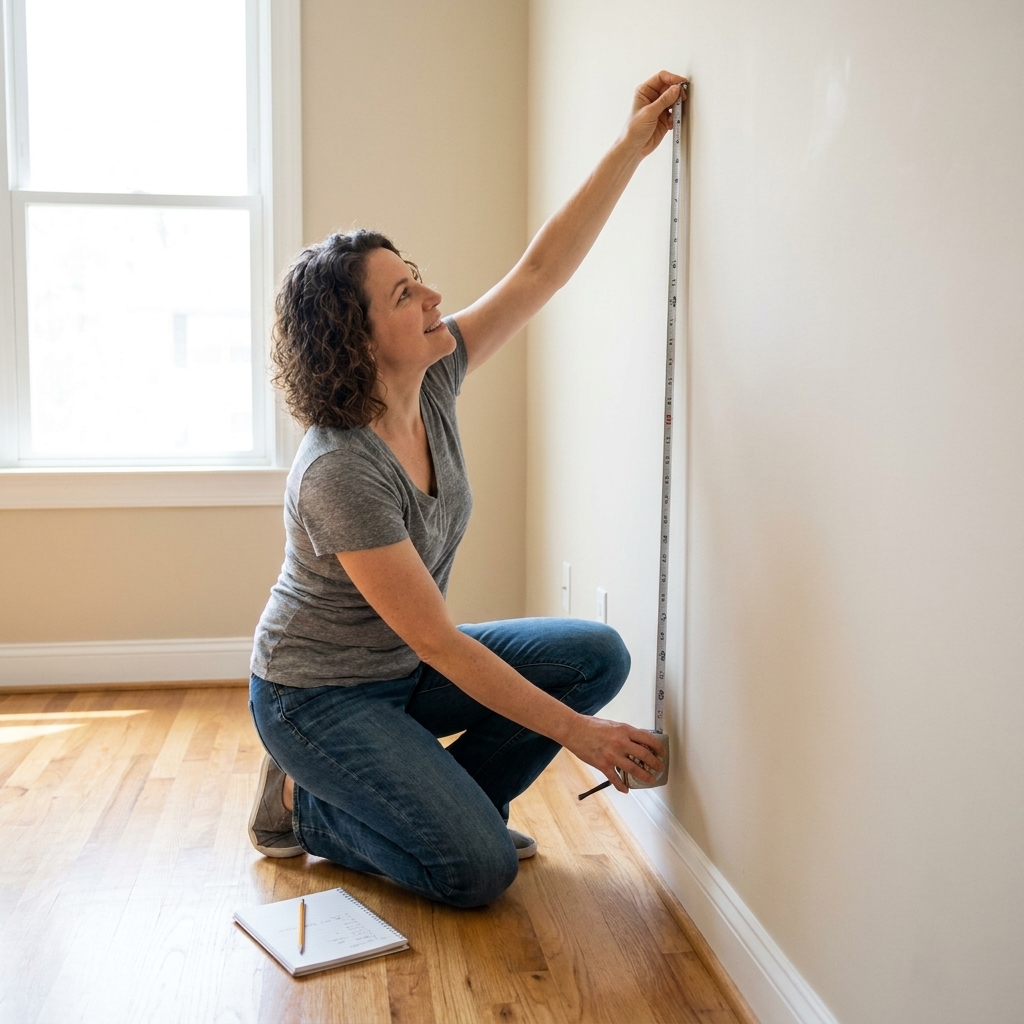
Step 1: Measure wall area
For a standard rectangular room:
- Perimeter = (Room length + Room width) × 2
- Wall area = Perimeter × Ceiling height
Example: A 12 ft × 10 ft room with 8 ft ceilings:
- Perimeter = (12 + 10) × 2 = 44 ft
- Wall area = 44 × 8 = 352 sq ft
Step 2: Subtract openings (optional)
If you want to be more precise, subtract doors and windows. I do this when the room has lots of glass or multiple doors. If it is one door and one average window, you can skip subtracting and simply build in a little waste buffer.
- Standard interior door: about 20 sq ft (3 ft × 6 ft 8 in)
- Typical window: often 12 to 15 sq ft (varies a lot)
Adjusted wall area = Wall area − (total door area + total window area)
Step 3: Multiply by coats
Total coverage needed = Adjusted wall area × Number of coats
Step 4: Convert to gallons
Gallons needed = Total coverage needed ÷ 350
That 350 number is a conservative square feet per gallon per coat rule of thumb. I use it to avoid running short, especially with darker colors, patchy walls, or fresh drywall repairs.
Quick reference
These are ballpark numbers for walls only, assuming 8 ft ceilings and two coats. The wall area column is before openings. The “Typical gallons” estimate assumes an average room with one door and one window and includes a small buffer, so you do not have to subtract openings to use it.
| Room size | Approx wall area (before openings) | Typical gallons for 2 coats |
|---|---|---|
| 10 × 10 ft | 320 sq ft | 2 gallons |
| 12 × 10 ft | 352 sq ft | 2 to 3 gallons |
| 12 × 12 ft | 384 sq ft | 3 gallons |
| 14 × 12 ft | 416 sq ft | 3 gallons |
| 16 × 14 ft | 480 sq ft | 3 to 4 gallons |
Reality check: Many bedrooms land in the 2 to 3 gallon range for two coats on walls, which is why I usually start there unless the room has tall ceilings or heavy texture.
Coverage pitfalls
This is where most underestimates happen. These factors do not always show up in simple square footage math, but they absolutely affect how much paint you use and how many coats it takes to look even.
1) Color changes
- Light to light (off-white to greige): often 1 to 2 coats.
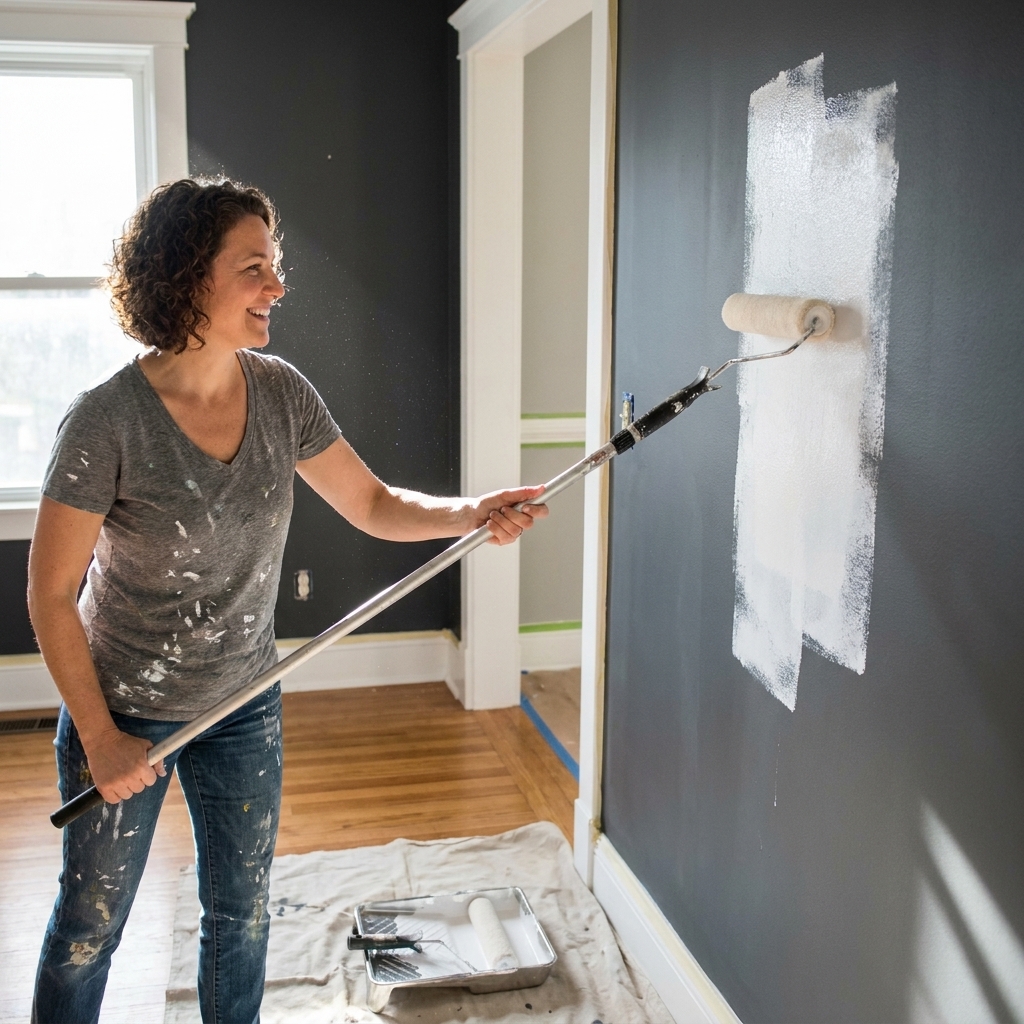
- Light to dark (beige to navy): usually 2 coats plus primer, or 3 coats without primer.
- Dark to light (red to soft white): plan on primer plus 2 coats, and sometimes a third coat depending on the color family.
If you are going to a much deeper or more saturated shade, I plan paint quantity assuming you will need one extra coat unless you are using a tinted primer and a high-quality paint with strong hide.
2) Fresh patches and new drywall
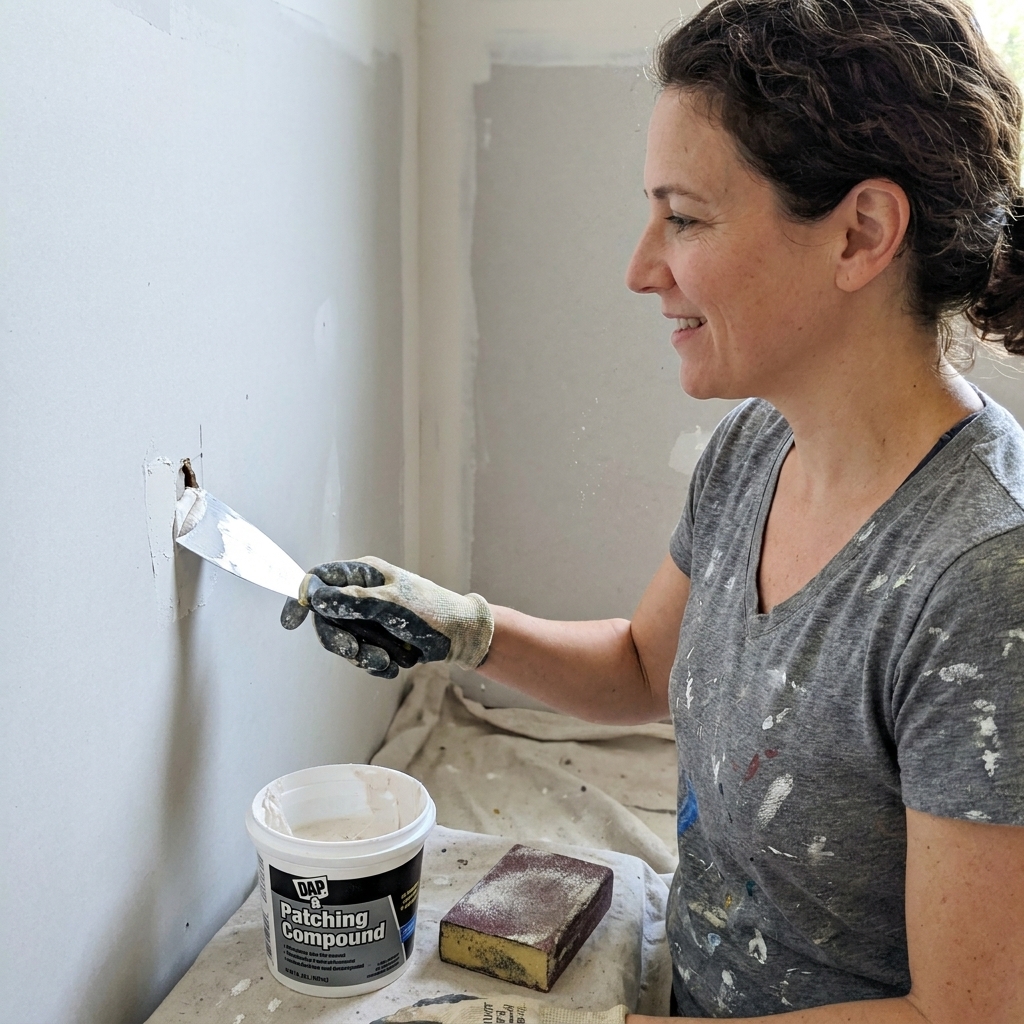
Spackle and joint compound soak up paint and can flash through (look duller) if you skip primer. If you have lots of repairs or brand-new drywall, add primer to your plan and do not be surprised if coverage is closer to 300 to 350 sq ft per gallon per coat.
3) Texture and porous walls
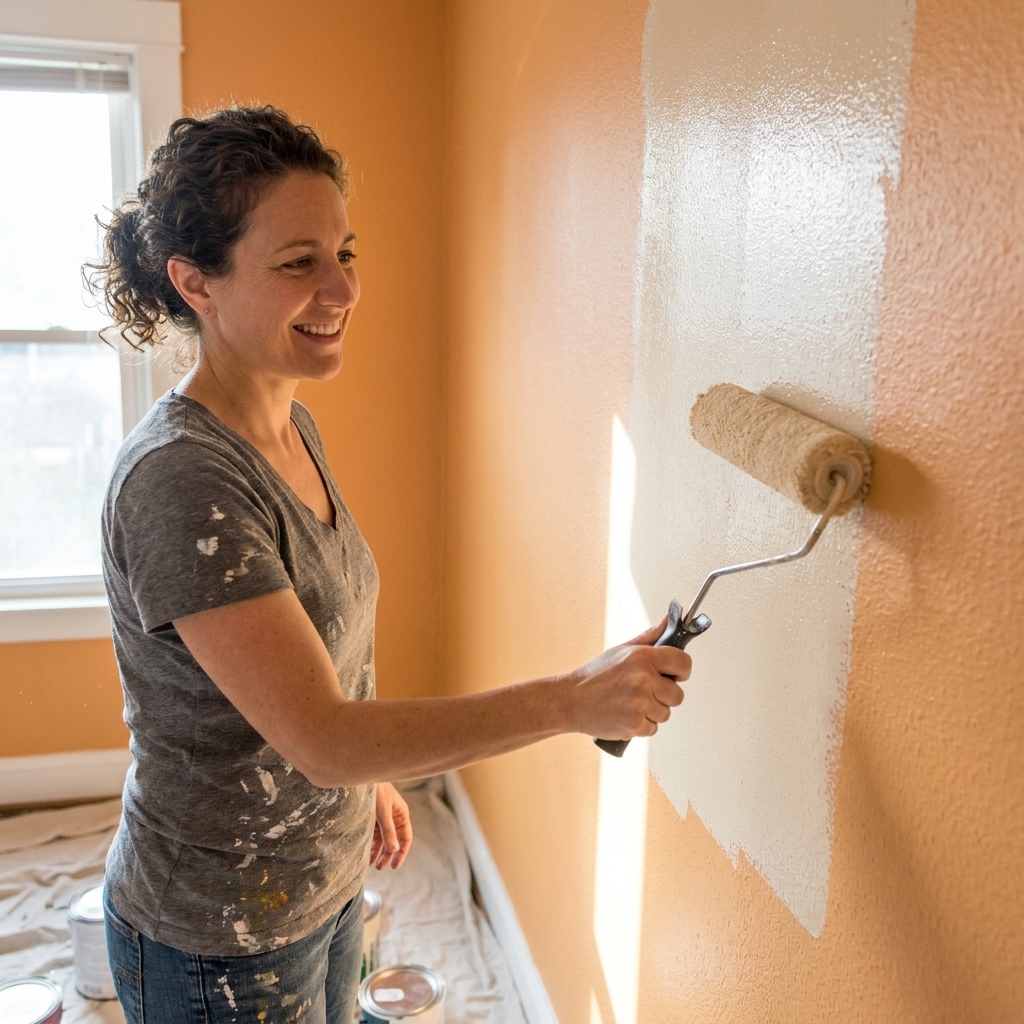
Orange peel, knockdown, heavy roller stipple, and plaster all increase surface area, which means more paint. These are rules of thumb, not hard standards, but they keep you in the safe zone:
- Smooth to lightly textured: about 350 sq ft per gallon per coat
- Moderately textured: about 300 to 325 sq ft per gallon per coat
- Heavily textured: about 250 to 300 sq ft per gallon per coat
4) Tall ceilings and stairwells
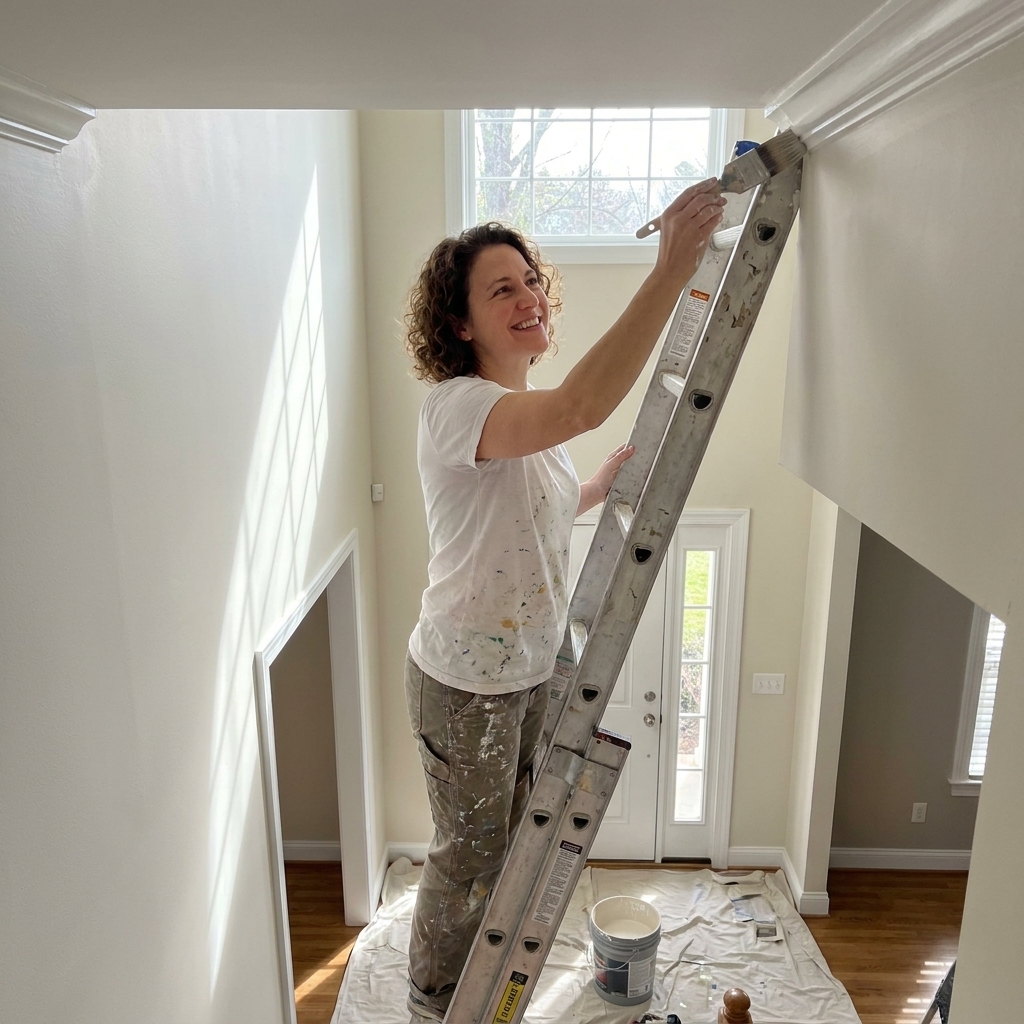
Rooms with 9 ft to 12 ft ceilings scale up fast because perimeter stays the same but height increases. If you are painting a stairwell or two-story entry, treat each wall as its own rectangle (width × height) and add them together. That area can easily equal a whole extra bedroom.
Odd layouts
Measure by wall
For L-shaped rooms, open concept spaces, bump-outs, and partial walls, break the job into rectangles:
- Measure each wall section’s width × height.
- Add all sections together.
- Subtract large openings if you want precision.
This method is also perfect for rooms with big built-ins or wide cased openings that eat up wall space. If you are painting built-ins, paneling, or a lot of shelving, treat those surfaces as their own rectangles and add them to the total.
Closets
Small reach-in closets are often 40 to 80 sq ft of wall area depending on size. If you are painting them the same color, include them. If you are skipping them, ignore them. Simple.
Accent walls
For one accent wall, just calculate that wall:
- Accent wall area = wall width × ceiling height
- Then multiply by coats and divide by 350
Most accent walls take 1 quart to 1 gallon depending on wall size and number of coats. If it is a bold color, I still assume two coats.
If you are using multiple colors in the same room (two-tone, wainscoting, color-blocking), run the math for each color area separately. It is the easiest way to avoid ending up short on the one shade you cannot fake.
Primer planning
Primer is its own product, so it is not that it magically reduces paint gallons every time. What primer does do is make your finish coats behave predictably, which can keep you from needing a third coat of expensive wall paint.
When primer is worth it
- New drywall or lots of joint compound repairs
- Stains, water marks, smoke residue
- Switching from very dark to light
- High sheen walls (satin to semi-gloss) that you are repainting with a flatter finish
How much primer to buy
Use the same square footage method, but primer coverage can vary by product and surface. A safe planning number is 300 to 400 sq ft per gallon per coat. If you are priming everything, assume one full coat of primer on the walls.
Tip from too many repaint projects: If you are using a deep color, ask the store to tint the primer toward your finish color. It is one of the easiest ways to improve hide and reduce the odds of needing extra coats.
Ceilings and trim
A lot of people intend to paint “the room” and then realize at checkout they did not budget for the ceiling or the trim. Here is the quick math.
Ceilings
- Ceiling area = Room length × Room width
- Gallons = (Ceiling area × coats) ÷ coverage rate
Ceiling paints often land in the same general coverage range as wall paint, but always check the label. If the ceiling is stained or you are covering water marks, plan on primer.
Trim and doors
Trim coverage depends on how much woodwork you have, but many trim jobs are small enough to handle with quarts, not gallons. Doors and baseboards can drink more paint than people expect, especially if you are switching from a dark enamel to a bright white. When in doubt, buy one quart for light touch-up level work, and step up to a gallon if you are doing multiple doors plus lots of casing.
Waste buffer
Even with careful math, you will lose some paint to:
- Roller and tray absorption
- Cutting in and back-rolling edges
- Touch-ups, especially on darker colors
- Porous or previously patched areas
My rule: add a 10 percent buffer for straightforward rooms. Add 15 to 20 percent if the walls are textured, you are covering a strong color, or you want extra left over for future touch-ups from the same batch.
Copyable examples
Example 1: Bedroom, two coats
Room: 12 × 10 ft, 8 ft ceilings, 1 door, 2 windows.
- Perimeter = (12 + 10) × 2 = 44 ft
- Wall area = 44 × 8 = 352 sq ft
- Openings: door 20 sq ft + windows 2 × 15 = 30 sq ft, total 50 sq ft
- Adjusted wall area = 352 − 50 = 302 sq ft
- Two coats = 302 × 2 = 604 sq ft
- Gallons = 604 ÷ 350 = 1.73
What I would buy: 2 gallons of paint. If it is a rich color or textured walls, bump to 3 gallons.
Example 2: Living room, 9 ft ceilings
Room: 16 × 14 ft, 9 ft ceilings, 2 doors, 3 windows.
- Perimeter = (16 + 14) × 2 = 60 ft
- Wall area = 60 × 9 = 540 sq ft
- Openings: doors 2 × 20 = 40 sq ft, windows 3 × 15 = 45 sq ft, total 85 sq ft
- Adjusted wall area = 540 − 85 = 455 sq ft
- Two coats = 455 × 2 = 910 sq ft
- Gallons = 910 ÷ 350 = 2.6
What I would buy: 3 gallons (or 4 if the walls are heavily textured or you are going dramatically darker).
Common questions
Is one gallon enough for a bedroom?
Sometimes, but usually only for one coat in a smaller room, or a situation where coverage is excellent and you are not changing the color much. For most bedrooms, two gallons is the safer buy for two coats.
How much does a quart cover?
A quart is one quarter of a gallon, so figure about 80 to 100 sq ft per coat on smooth walls. Quarts are great for a small accent wall, a closet, or touch-ups when you already know the color and sheen.
Should I subtract windows and doors?
If the room is typical, you can skip it and just add a small buffer. If the room has lots of openings (think: French doors, multiple big windows), subtracting helps you avoid buying an extra gallon you do not need.
What if my paint says one-coat coverage?
Take it as “sometimes, in perfect conditions.” For a long-lasting, even finish, I still plan for two coats on walls. One coat can look fine when wet and then turn patchy as it dries, especially in raking light.
Does sheen change coverage?
Not dramatically, but higher sheen paints (like satin) can show lap marks and unevenness more easily, which can make you feel like you need extra paint. The bigger issue is prep: smooth sanding and consistent rolling technique.
Before you buy
- Measure perimeter and ceiling height (or measure each wall for odd layouts).
- Decide whether you are subtracting doors and windows.
- Decide coats: almost always 2 for walls, plus primer if needed.
- Choose a conservative coverage number: 350 sq ft per gallon per coat (lower for texture).
- Add 10 to 20 percent buffer based on wall condition and color change.
- If you want touch-ups later, buy enough to keep a little leftover from the same batch.
With these calculations in hand, you can walk into the paint store knowing exactly what you need, and walk out without guessing.