If you have ever painted a room and immediately regretted the smell, you already understand the “why” behind low-VOC and zero-VOC paints. That classic fresh-paint odor is not just annoying. It can also signal chemicals evaporating into your air while the paint dries and cures.
The good news: healthier paint options are easier to find than they were even a few years ago, and many of them perform beautifully on real, lived-in walls. This guide breaks down what VOCs are, what labels actually mean, and how to choose an interior paint that is easier on your indoor air without making your weekend project harder.
What VOCs are
VOCs are volatile organic compounds. “Volatile” means they evaporate easily at room temperature. In paint, VOCs can come from solvents and other ingredients that help paint:
- Spread smoothly
- Dry in a predictable way
- Resist scuffs and stains
- Stay stable in the can
As paint dries, some VOCs off-gas into the air. That is why indoor painting can affect indoor air quality, especially in small rooms, homes with limited ventilation, or households where someone is prone to irritation from odors or fumes.
Low-VOC vs zero-VOC
Paint marketing can be confusing because “low” and “zero” sound absolute, but they are usually based on measured VOC content, often listed in grams per liter (g/L) on the technical data sheet. Also worth remembering: low-VOC does not always mean low-odor, and low-odor does not always mean low-VOC.
Low-VOC paint
Low-VOC typically means the paint falls below a certain threshold set by a regulation, a retailer standard, or a manufacturer definition. The exact cutoff varies by jurisdiction and product category (flat vs non-flat, primers, specialty coatings). In many consumer paint lines, you will commonly see low-VOC interior wall paints land around:
- Often under about 50 g/L for many water-based wall paints
- Sometimes under about 100 g/L still gets marketed as “low” depending on the category and local rules
If you want the stricter, apples-to-apples answer, use the technical data sheet and compare products within the same paint type and sheen.
Zero-VOC paint
Zero-VOC usually means the base paint is at or near zero VOC content before tinting. Many brands use a definition of under about 5 g/L for the untinted base, but it still varies by product line and by region.
The tinting catch
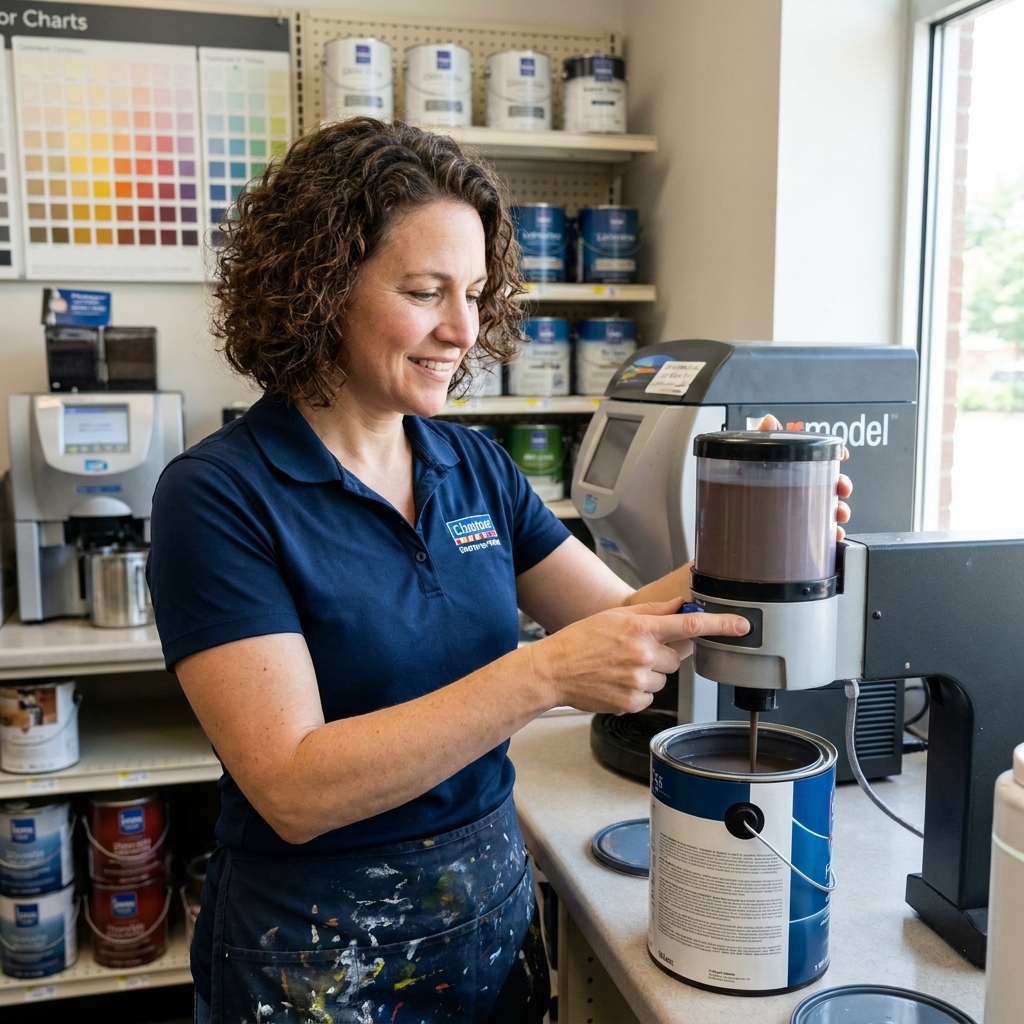
Many “zero-VOC” paints can pick up VOCs when colorants are added. Some brands use low-VOC colorants, some do not, and deep or highly saturated colors typically require more tint.
My practical takeaway: if healthier air is your priority, choose a low or zero-VOC line and ask the store to use low-VOC colorants. Then check the product’s technical sheet for VOC content after tinting, if available.
One more reality check: even when VOC content is very low, you can still notice a smell from other ingredients that are not classified as VOCs. If odor is a major concern in your home, ventilation is still your best friend.
After the paint dries
They can. Dry-to-touch is not the same as fully cured.
- Drying is when water or solvent evaporates and the surface is no longer tacky.
- Curing is when the paint film fully hardens and reaches its final durability.
Most interior wall paints feel dry in a few hours, but curing can take days to weeks depending on humidity, temperature, airflow, and the paint formula. VOC emissions are usually highest right after application, then drop quickly, but small amounts can continue as the coating finishes curing, especially in closed-up spaces.
Choosing healthier interior paint
I love an eco-friendly label as much as anyone, but I also love walls that can survive real life. Here is what to look for when you are standing in the paint aisle trying to make a smart choice quickly.
1) Start with the right type
- Water-based acrylic latex is the most common choice for interior walls and is widely available in low and zero-VOC options.
- Oil-based products tend to have higher VOCs and a stronger odor. For most interior wall projects, you can skip them.
2) Use the technical data sheet
The front label is marketing-heavy. The technical data sheet (often online) is where you will find VOC content, recommended primers, cure times, and cleanup instructions. If you can find only one number, look for VOC g/L.
3) Choose the right sheen
Sheen choice is not only about style. It affects washability and how much wall texture you will see.
- Flat or matte: forgiving on imperfect walls, great for bedrooms and low-traffic spaces
- Eggshell or satin: my go-to for most living spaces, easier to wipe clean
- Semi-gloss: better for trim than walls, but useful in humid rooms if you want extra wipeability
In low-emissions paint lines, you can typically get the same sheen range as conventional paint, but always confirm before committing to a color.
4) Prioritize scrubbability
Some early eco-paints had a reputation for being softer or easier to burnish. Today, many lower-VOC interior paints hold up extremely well, but performance still varies by product line. Look for notes like “washable,” “scrubbable,” or “stain resistant,” and respect cure time before you start wiping.
Certifications and claims
Certifications vary by region, and not all labels mean the same thing. Still, a few claims can be useful when you want paint that is easier on indoor air.
- VOC content listed clearly (g/L): Transparency is a good sign.
- Low odor: Helpful, but odor is not a perfect measure of chemical content.
- No added formaldehyde: A valuable claim for some households, especially in smaller rooms.
- Third-party emissions certifications: If you want extra reassurance, look for programs such as GREENGUARD Gold, UL ECOLOGO, or Green Seal (availability varies by region and product line).
If you are choosing between two similar paints, I tend to trust the one that provides more technical detail over the one that leans on vague buzzwords.
Painting habits for cleaner air
Low-VOC paint helps, but your setup matters just as much. These are the small moves that make a noticeable difference during and after painting.
Ventilation that works
- Open two windows if you can, ideally on opposite sides of the home for cross-ventilation.
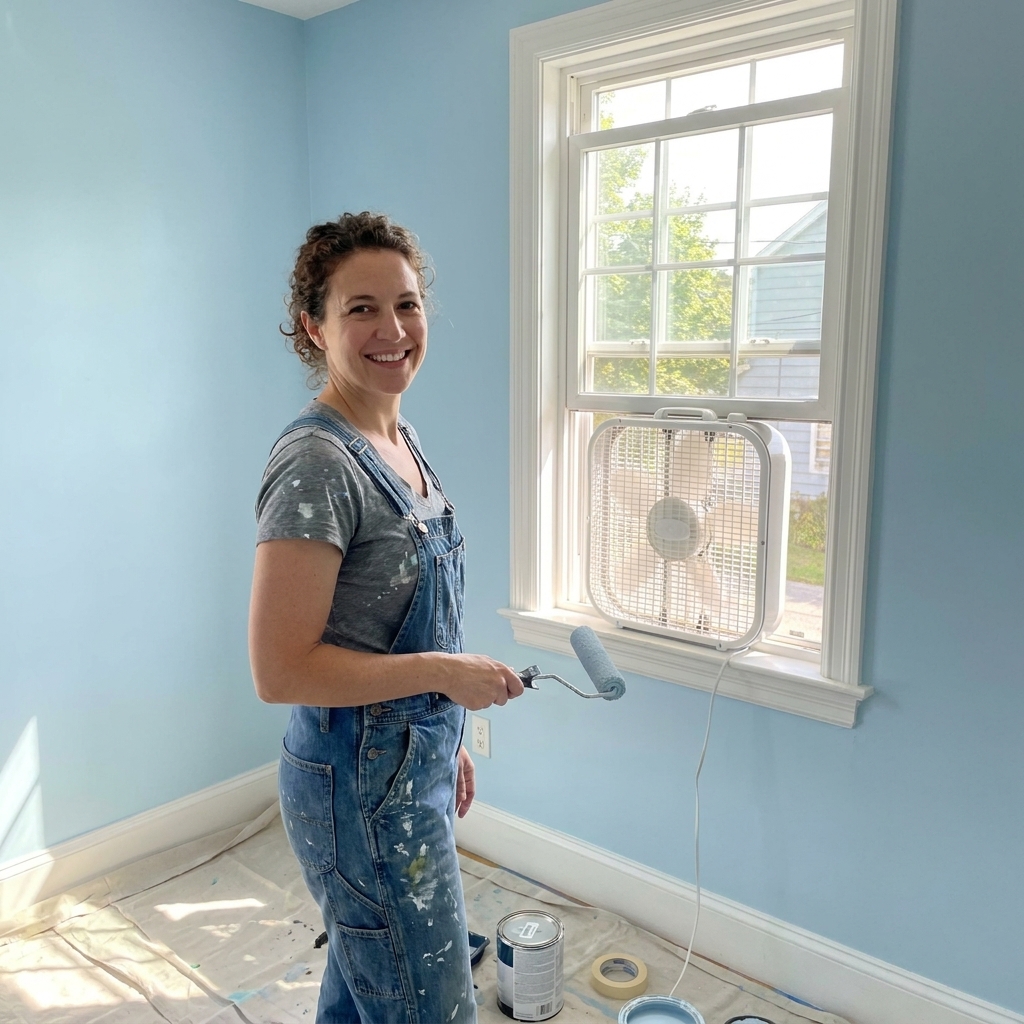
- Place a box fan in one window blowing out to exhaust air outdoors. Do not aim exhaust into a hallway or another occupied room.
- Keep interior doors open so air is not trapped in the room you painted.
Use a low-odor primer when needed
Primers can be stinkier than paint, and some stain-blocking formulas are higher-VOC. If you are painting over:
- New drywall: use a drywall primer recommended by the paint line
- Water stains, smoke, or heavy odors: you may need a specialty sealer. If you do, ventilate aggressively and consider doing that step when the house can air out
Do not rush the cure
Even with very low-VOC paint, give it time to harden. Keep the room ventilated as much as weather allows for the first couple of days, and avoid heavy cleaning for at least a week unless the label says otherwise.
Cleanup and leftovers
Seal the lid tightly on leftover paint and store it outside the living space if possible (like a garage or shed that stays above freezing). For brushes and rollers, follow the label for soap-and-water cleanup, and let rags or roller covers dry in a well-ventilated area before disposal so odors do not linger indoors.
Common questions
Is zero-VOC paint non-toxic?
“Zero-VOC” is not the same as “non-toxic.” It usually refers to very low VOC content, but paint still contains other ingredients that can irritate some people. If your household is especially sensitive, consider testing a small area and ventilating well, even with premium zero-VOC paint.
Why does my low-VOC paint still smell?
Odor can come from ingredients that are not classified as VOCs, from the primer, from caulk or patching compounds, or from tinting colorants. Temperature and airflow also change how noticeable the smell is.
Are low-VOC paints worse at covering?
Not necessarily. Coverage depends on pigment quality, sheen, wall condition, and color change. If you are going from dark to light, or painting over patchwork, plan for primer and two coats regardless of VOC level.
Is it safe to sleep in a freshly painted room?
It depends on your sensitivity and how well the room is ventilated. In my own home, I aim for at least 24 hours of drying with good airflow for low or zero-VOC paints, and longer for small rooms, humid weather, or strong odor. If anyone in your home has asthma or is prone to irritation from fumes, give it more time and keep air moving.
What about paints labeled “natural” or “eco”?
Those terms are not tightly standardized. Some “natural” paints are excellent, and some are fussy to apply or not as washable on busy walls. Look for clear VOC information, realistic performance claims, and application instructions that match your space.
Quick checklist
- Pick a water-based acrylic interior wall paint in a low or zero-VOC line
- Confirm VOC g/L on the technical data sheet if possible
- Ask about low-VOC colorants, especially for deeper colors
- Choose sheen based on your room’s traffic and wall texture
- Plan ventilation and cure time, not just painting time
Healthy-home choices do not have to mean high-stress painting. With the right product and a little airflow strategy, you can get that crisp, clean-wall feeling without the lingering chemical cloud.