Basements are tricky because paint does not just “become lighter” when you choose a pale color. Downstairs light is usually limited, cool-leaning, and uneven (think: bright pools under cans and darker corners everywhere else), so the wrong undertone can turn a soft neutral into something that looks gray-green, purple, or oddly dingy by night. The good news is that you can absolutely make a basement feel brighter with the right mix of LRV (Light Reflectance Value), undertone, and finish, plus a few small moves that help paint do its job.
How basements change color
Most basements have one or more of these light issues:
- Small windows or window wells that pull in cooler daylight and cast deep shadows.
- Artificial lighting doing the heavy lifting, often a mix of bulbs that do not match (warm lamps, cool overhead LEDs).
- Lots of hard surfaces like concrete, LVP, tile, or exposed ceilings that often make colors read colder, depending on what those surfaces are reflecting.
That means “bright white” can look sterile, “greige” can look flat, and certain beiges can suddenly go peachy. You are not imagining it. The basement is simply a harsher judge.
LRV: the basement sweet spot
LRV is a manufacturer-provided number that estimates how much visible light a paint color reflects. Higher LRV generally reads brighter in low light, but keep in mind that LRV is not perfectly standardized across brands and formulas, so treat it as a helpful guide, not a universal ruler.
- LRV 70 to 85: My go-to range for most basements. Brightens without feeling like a blank sheet of paper.
- LRV 60 to 70: Great if you want cozy but still lifted, or if you have decent lighting and want more color depth.
- LRV 85+: Useful in very dark basements, but ultra-light colors can make texture more noticeable when you also have higher sheen and raking light (like strong recessed cans grazing the wall).
Important reality check: LRV does not fix shadows. It helps with overall brightness, but your lighting plan and sheen choice determine how “alive” the walls feel.
Undertones that stay fresh
When a basement reads cold, the instinct is often to grab the warmest beige on the strip. Sometimes that works, but sometimes it turns muddy under artificial light. Here is how I think about undertones downstairs.
Best undertones for most basements
- Soft warm whites (creamy, not yellow): They lift the room without looking icy.
- Balanced greiges: A mix of gray and beige can feel clean and modern, as long as it is not too cool.
- Taupes with a whisper of warmth: These hide scuffs well and feel grounded.
Undertones to test carefully
- Blue-based grays: They can feel steely and “below-grade” fast.
- Green-leaning neutrals: In dim light, green can surface more than you expect.
- Pink-violet undertones: Some popular light grays go lavender in basements at night.
If you remember one thing: choose a neutral with gentle warmth, then let lighting do the rest.
Basement colors that brighten
These are reliable “basement-friendly” directions. Exact paint names vary by brand, so use these as targets and confirm with samples in your own lighting.
1) Warm white that still feels crisp
Look for a white that reads clean in daylight but does not turn blue under LEDs. These are great for low ceilings and open basement layouts because they unify everything.
- Works best with: warm to neutral bulbs (around 2700K to 3000K), light oak or medium wood tones, black accents.
- Avoid if: you have very yellow incandescent lighting everywhere (it can push creamy whites too far).

2) Light greige for an above-ground feel
A light greige is my favorite cheat code for basements because it adds just enough pigment to look intentional, but still reflects plenty of light.
- Works best with: gray LVP floors, white trim, mixed metal finishes.
- Pro tip: if it looks perfect upstairs, go one step warmer for downstairs.
3) Soft beige that does not go orange
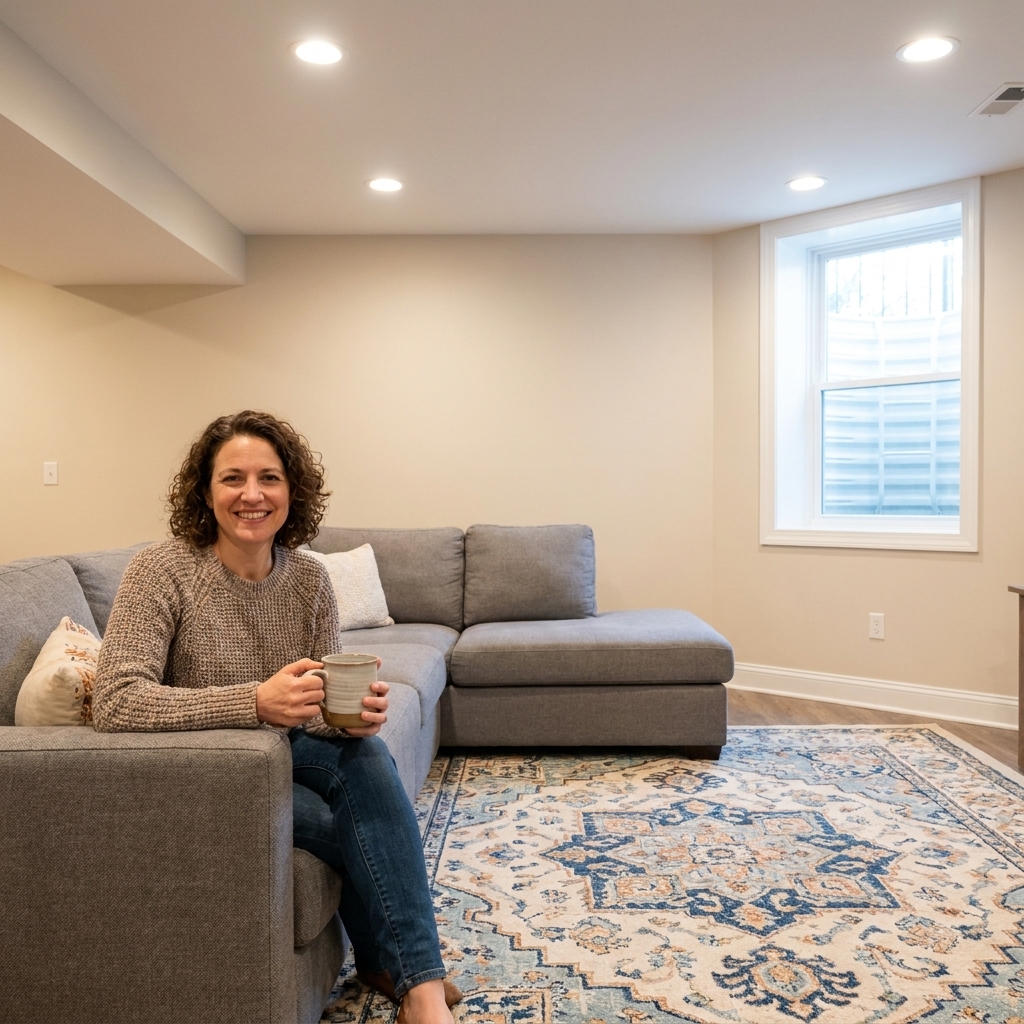
Modern beige is quieter than the honey beiges of the early 2000s. The right beige makes basements feel welcoming and hides day-to-day scuffs better than pure white.
- Works best with: warm rugs, tan leather, brass or bronze hardware, creamy trim.
- Test for: peachy shift at night under very warm bulbs.
4) Pale taupe for busy spaces
If your basement is doing a lot of jobs (TV area, toys, home gym, storage), pale taupe is a steadying neutral. It keeps the room from feeling stark while still reading light.
- Works best with: natural textures (woven baskets, wood shelving), off-white trim.
- Bonus: taupe is forgiving on older drywall that is not perfectly smooth.
5) Light muted color with gray in it
Yes, you can do color in a basement. The trick is choosing a muted version so it stays sophisticated in low light.
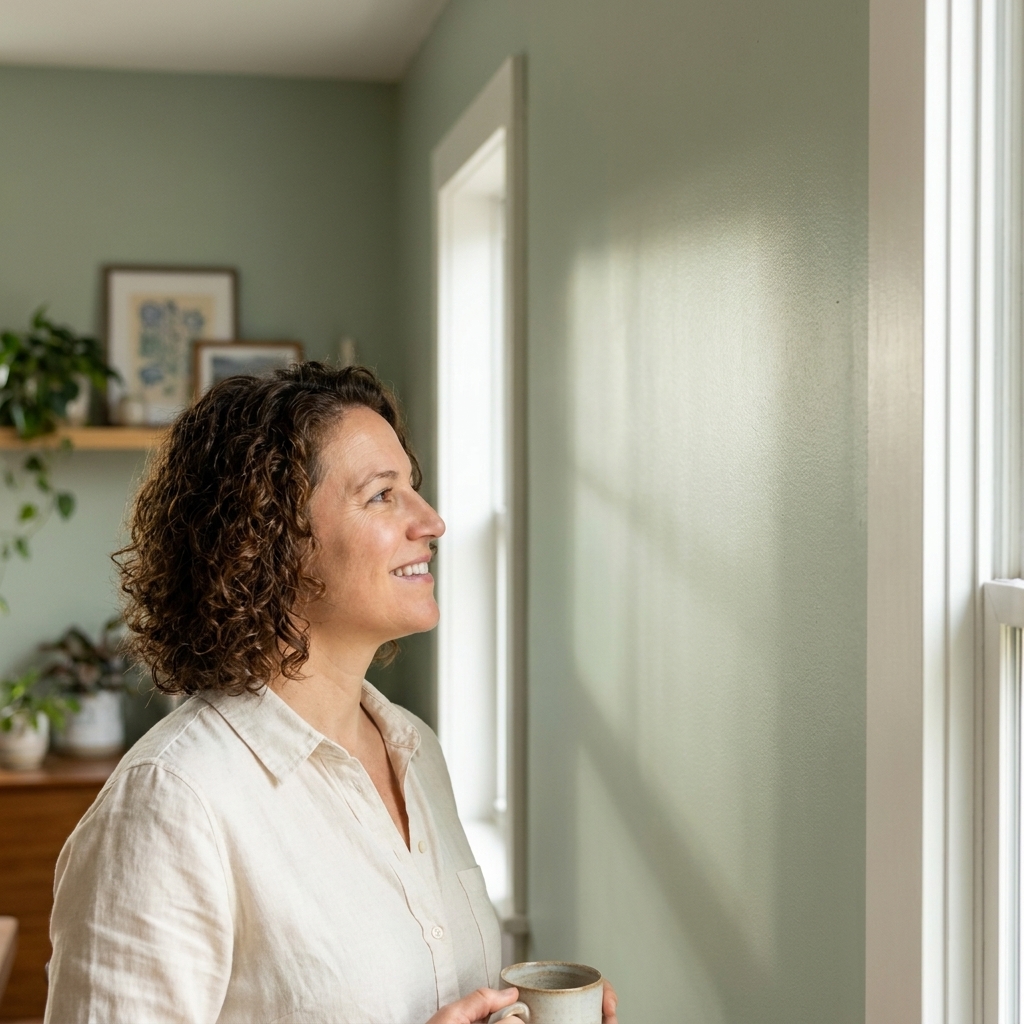
- Muted blue-green (spa vibes without going teal): nice for a guest suite or office corner.
- Dusty blue (reads calm, not childish): great for TV rooms.
- Soft sage (gentle, not swampy): works beautifully with warm white trim.
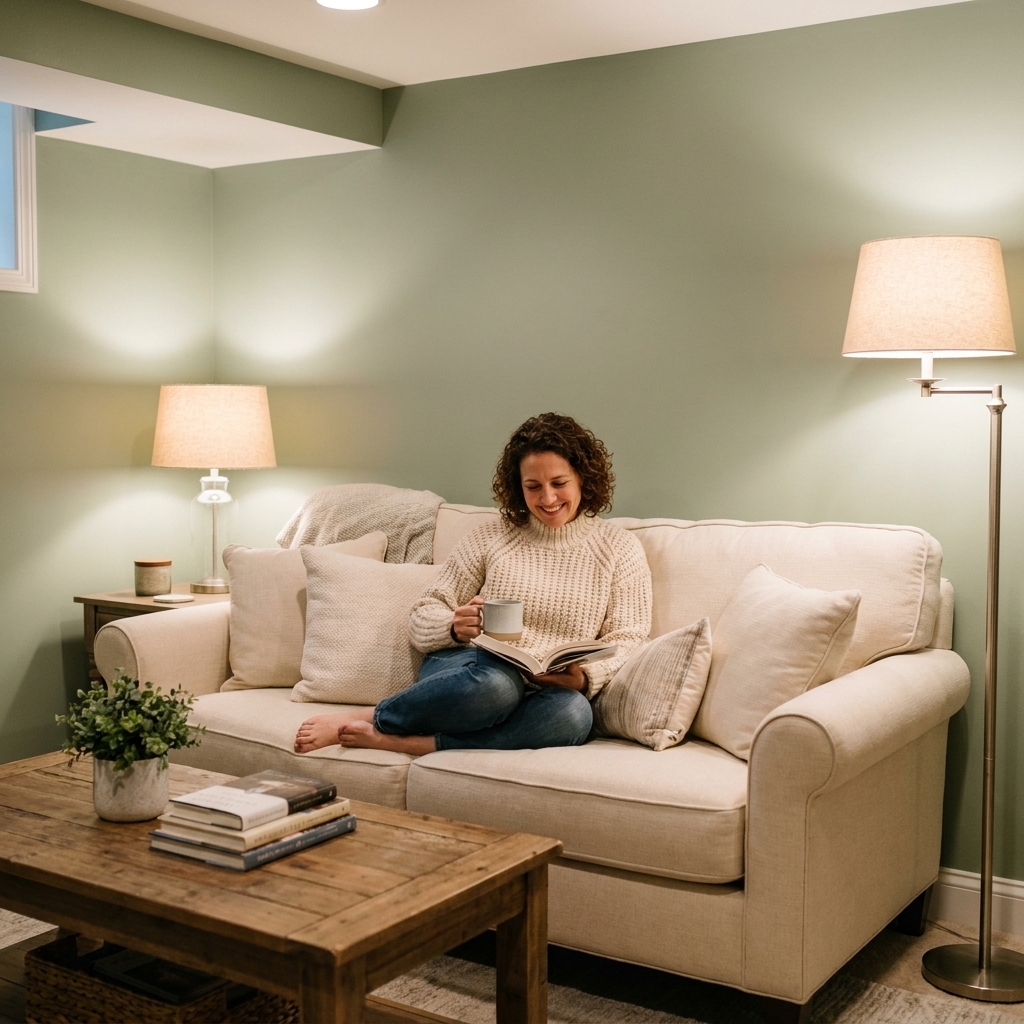
Real paint color examples
If you want a starting point, here are a few popular, basement-friendly picks across brands. Treat these as examples, then sample in your space.
- Warm whites: Benjamin Moore White Dove, Sherwin-Williams Alabaster, Behr Swiss Coffee
- Light greiges: Sherwin-Williams Agreeable Gray, Benjamin Moore Edgecomb Gray, Behr Silver Drop
- Soft taupes: Benjamin Moore Pale Oak, Sherwin-Williams Accessible Beige
- Muted color options: Sherwin-Williams Sea Salt (test carefully for green), Benjamin Moore Boothbay Gray
Finishes that look brighter
Basements often have more wall texture, patching, and imperfect corners. The shinier the paint, the more all of that shows, especially in raking light.
- Walls: eggshell or satin. Eggshell hides more. Satin is more washable, but it can show imperfections a bit more under recessed lighting.
- Trim and doors: satin or semi-gloss to add bounce and a clean outline.
- Ceiling: flat ceiling paint, unless you have a very smooth ceiling and want a touch more reflectivity.
If you want the room to feel brighter without spotlighting drywall, use brighter color first, then strategic sheen on trim and doors.
Ceiling and trim tricks
Keep the ceiling lighter
A classic basement fix. A lighter ceiling lifts the room visually, especially with low head height and soffits.
Use clean trim to draw lines
Crisp trim gives the eye a boundary, which can make a basement feel more finished and less like one big shadowy box.
Try a one-color wrap in choppy layouts
If your basement is a maze of small rooms, painting walls and trim the same light neutral can reduce visual breaks and help light travel.
Lighting: CCT and CRI
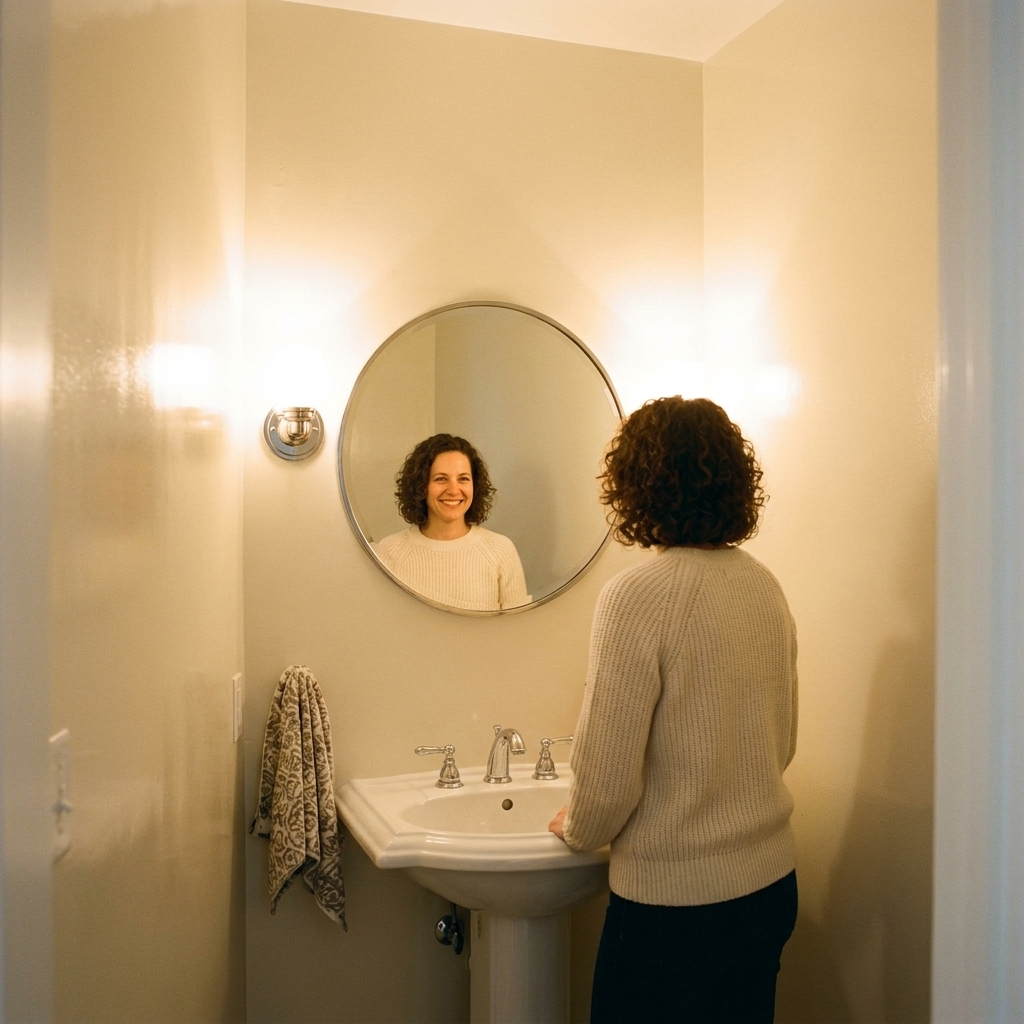
I have watched people repaint an entire basement when the real issue was mismatched bulbs. Before you commit to final color, decide what “warm” means in your space and keep it consistent.
- 2700K: very warm and cozy. Great for family rooms and movie spaces. Can push beiges warmer.
- 3000K: my favorite all-around basement setting. Warm enough to feel inviting, still fairly true to color.
- 3500K to 4000K: brighter and crisper. Can make neutrals look cooler, which is sometimes useful in very warm color schemes.
One more detail that matters: if you want paint colors to look accurate, choose bulbs with high CRI (90+) or strong color rendering specs. You can have the right Kelvin temperature and still get “off” color if the bulb quality is low.
Pick one temperature for most fixtures, then sample paint. Your undertones will behave more predictably.
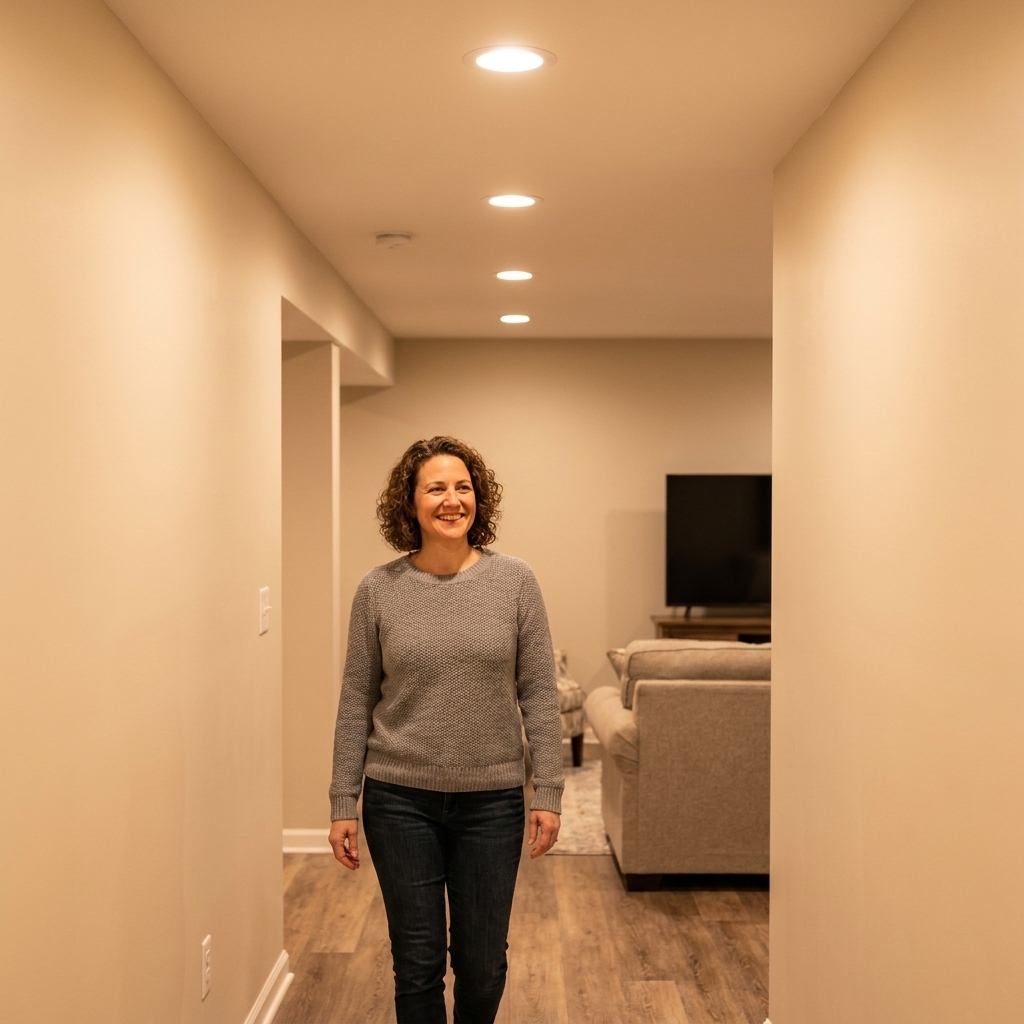
Basement prep that matters
If your basement has ever been damp, prep is not optional. The best color in the world will still fail if the surface is compromised.
- Check for moisture first: address leaks, window well issues, or damp spots before painting. If you see white, powdery residue on masonry (efflorescence), fix the moisture source and clean it properly before priming.
- Handle mildew the right way: clean and treat affected areas, then consider a mildew-resistant primer or paint if humidity is a recurring issue.
- Match primer to the surface: drywall, patched areas, and masonry do not want the same prep. Concrete or CMU often needs a masonry primer or sealer, especially if it has been previously damp.
- Control humidity: a dehumidifier can do more for a basement’s long-term “fresh” feel than any single paint color.
Sampling routine
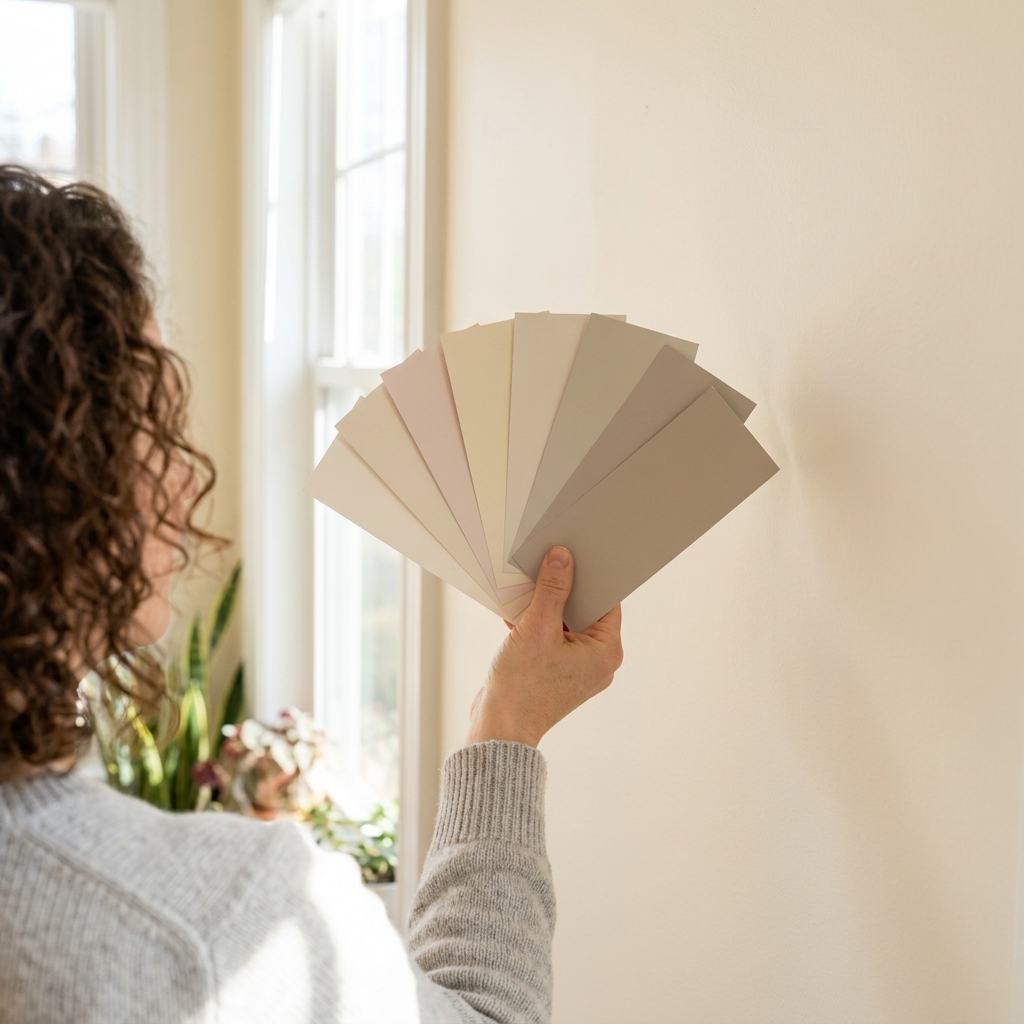
- Sample on multiple walls, especially the wall farthest from the window and the wall closest to it.
- Go big. At least 12 x 12 inches, preferably larger. Low light makes small samples misleading.
- Check morning, afternoon, and night. Basements can swing dramatically once lamps and overheads are on.
- Place a white sheet of paper next to the sample to expose undertones. You will spot green, pink, or blue immediately.
- Do not forget the floor and sofa effect. Carpet and sectional fabric can tint your walls more than you expect.
Easy color pairings
- Light greige walls + warm white trim + black hardware: clean and modern, great with LVP floors.
- Creamy white walls + warm wood tones: makes a basement feel like a real living space, not a utility zone.
- Soft taupe walls + bright white trim: subtle contrast that helps define doors and windows.
- Muted blue-green walls + creamy trim: calm and cozy, especially in guest rooms or offices.
Common mistakes
- Mistake: Choosing a cool gray to “modernize.”
Do instead: Choose a warmer greige or a warm white, then modernize with lighting and trim. - Mistake: Going too dark everywhere for a theater vibe.
Do instead: Keep the main space light, then do an accent wall behind the TV in a deeper color. - Mistake: Using high-gloss paint to bounce light.
Do instead: Use satin on trim and doors, eggshell or satin on walls, and add more light sources. - Mistake: Sampling paint under one lamp.
Do instead: Test under the exact bulbs you will use long-term, with matching color temperature.
Quick FAQ
What LRV is best for a dark basement?
If the basement feels cave-like, start around LRV 70 to 85. You will get a noticeable lift without the harshness that can come with ultra-bright whites.
Should basements be painted white?
White can be great, but the best basement whites usually have a soft warm undertone. Stark, cool whites can look blue or sterile under basement lighting.
What is the easiest safe neutral for a basement?
A light warm greige is typically the safest. It reflects enough light to brighten, but has enough pigment to avoid looking chalky or flat.
Do I need a special primer for basement walls?
If walls are stained, previously damp, or patched heavily, prime. For water staining, use a stain-blocking primer. For raw drywall repairs, a quality drywall primer helps your finish coat look even. For masonry walls, choose a primer made for concrete or CMU.
One last tip
When you are stuck between two colors, pick the one that looks a little too warm on the swatch. In basement light, warmth usually settles into “inviting,” while cool tones can slide into “unfinished.” Pair that with consistent bulb temperature and good color rendering, and your basement will feel like a real room, not an afterthought.